



W. & J. A. Baxter Ltd

© Ken Hawley Collection Trust - K.0077
The Baxters were merchants, who sold table cutlery, butchers’ knives, sheath knives, painters’ tools, scissors, canteens, spoons, and forks. The family line can be traced to Isaac (1828-1914), a watch and clock repairer, and his wife, Harriet. Isaac had two sons: George Harry (1857-1936) and Walter (1875-1958). George Harry worked as a file manager, but his lengthy obituary emphasised his life as a ‘veteran Ecclesfield cricketer’ (Hoyland Express, 28 November 1936). Walter trained as a hardware merchant’s clerk and then became a commercial traveller. After the First World War, he joined forces with his nephew, Joseph Albert Baxter (1891-1972), who was the son of George Harry and his wife, Eliza. Joseph had been trained as a file manufacturer’s clerk.
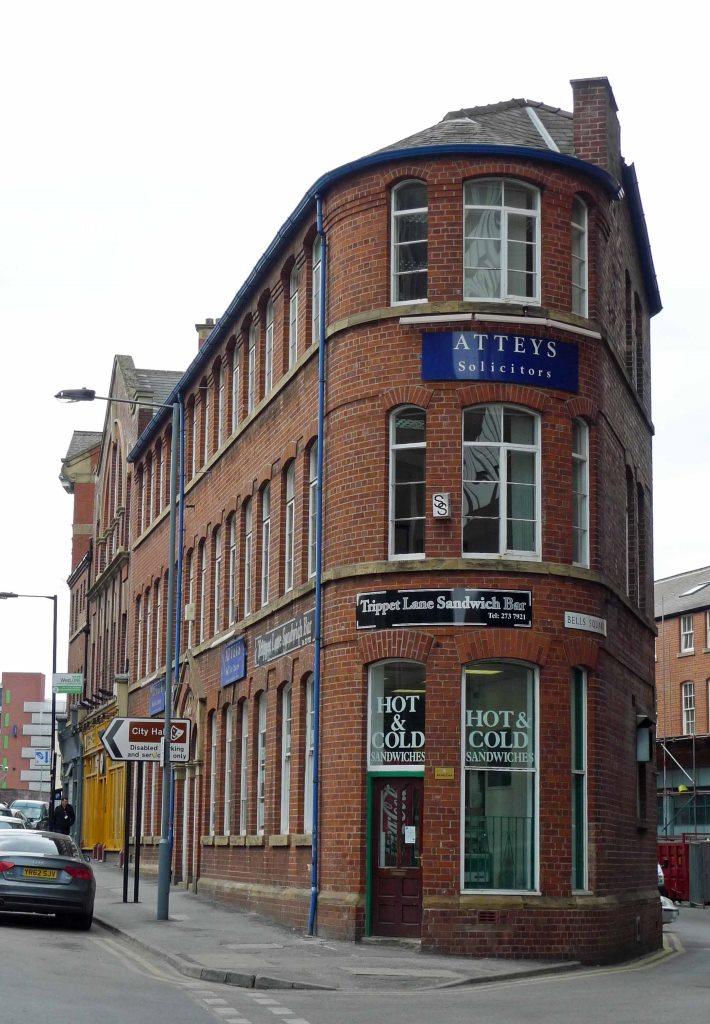
W. & J. A. Baxter began to trade first in Eyre Lane, and then by the early 1930s in Matilda Street. The firm was incorporated in 1933 with £2,000 capital in Trippet Lane. Baxter’s occupied Congo Works, which still stands in Trippet Lane and is easily recognisable because of its prow-like shape (Wrigley, 20051). Walter Baxter died on 16 April 1958, aged 83, at The Royal Hotel, Whitley Bay, while on a business trip. A Congregationalist, he lived in Abbey Lane, and his funeral was at Nether Chapel, Norfolk Street. He was buried at Norton, leaving £13,967. Joseph died on 13 February 1972. He, too, was buried at Norton cemetery. He left £3,200. The Baxter family still operated at Congo Works in the early 1970s, when G. R. Baxter was the manager. The name was later acquired by Slater.
1 Wrigley, J.R., An Industrial Sheffield Camera (Sheffield, 2005)